

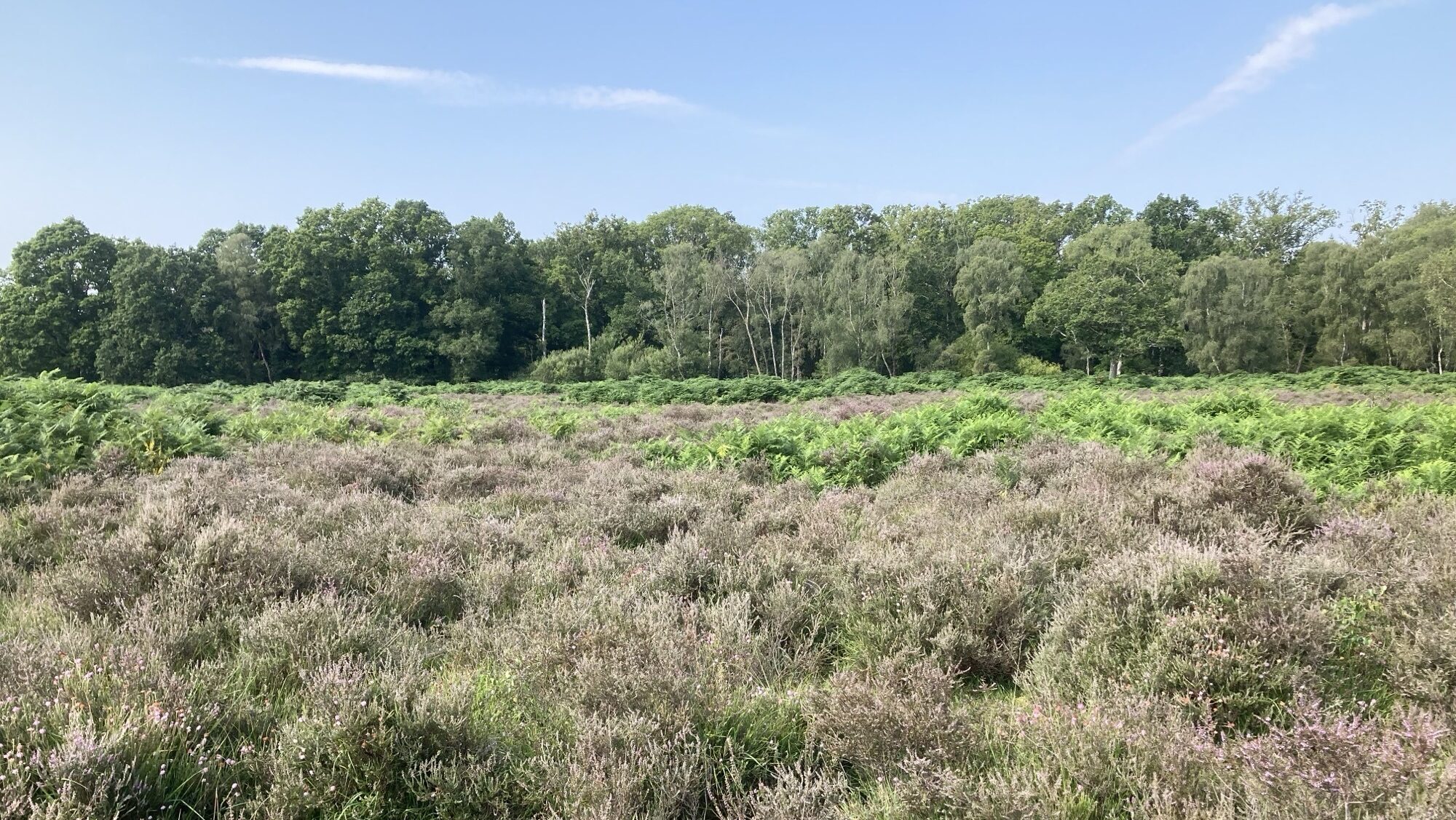
Monitoring Lowland Heaths and Woodlands
Lowland Heath and Woodland Monitoring
Forestry England conducts ongoing monitoring of heathland restoration sites to guide management decisions and assess restoration progress.
This programme includes a series of vegetation surveys focused on post clearfell vegetation recovery and the effects of bracken harvesting on vegetation dynamics.
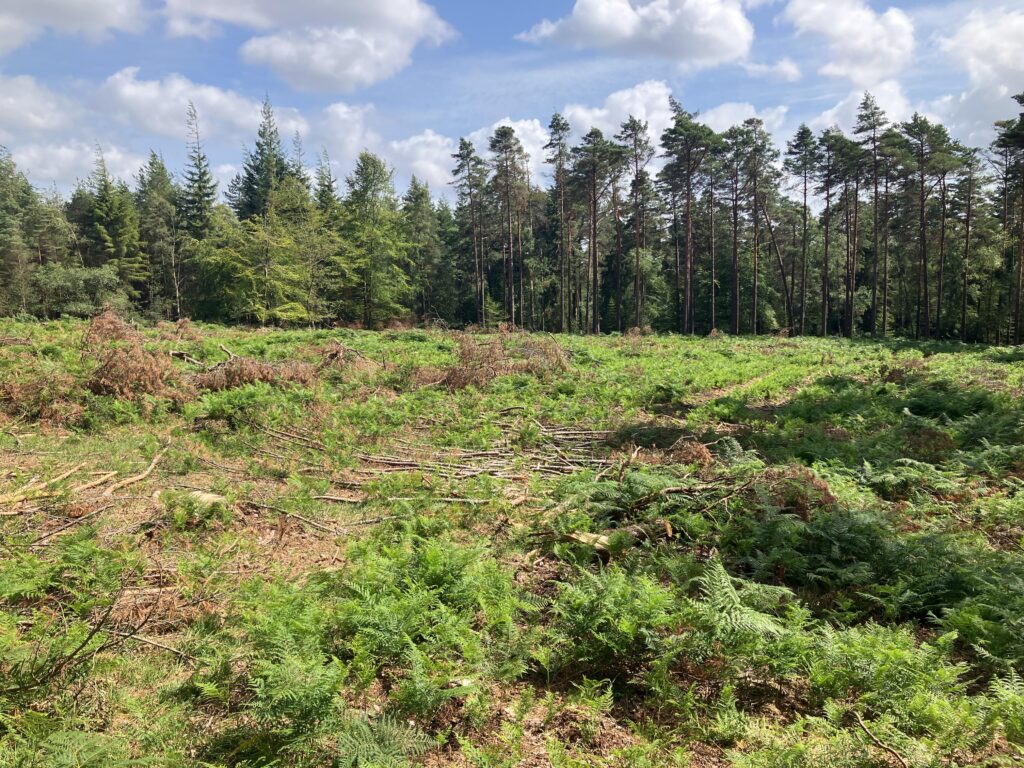
Post clearfell vegetation recovery
We assess how vegetation responds following clear-fell restoration, during which ridge-and-furrows are smoothed, forestry drains are infilled, and tree stumps are sheared. Here, shearing refers to the mechanical grinding down of tree stumps that have been left after the plantation trees have been harvested.
These surveys help determine how quickly key heathland species return and how the habitat structure develops over time.
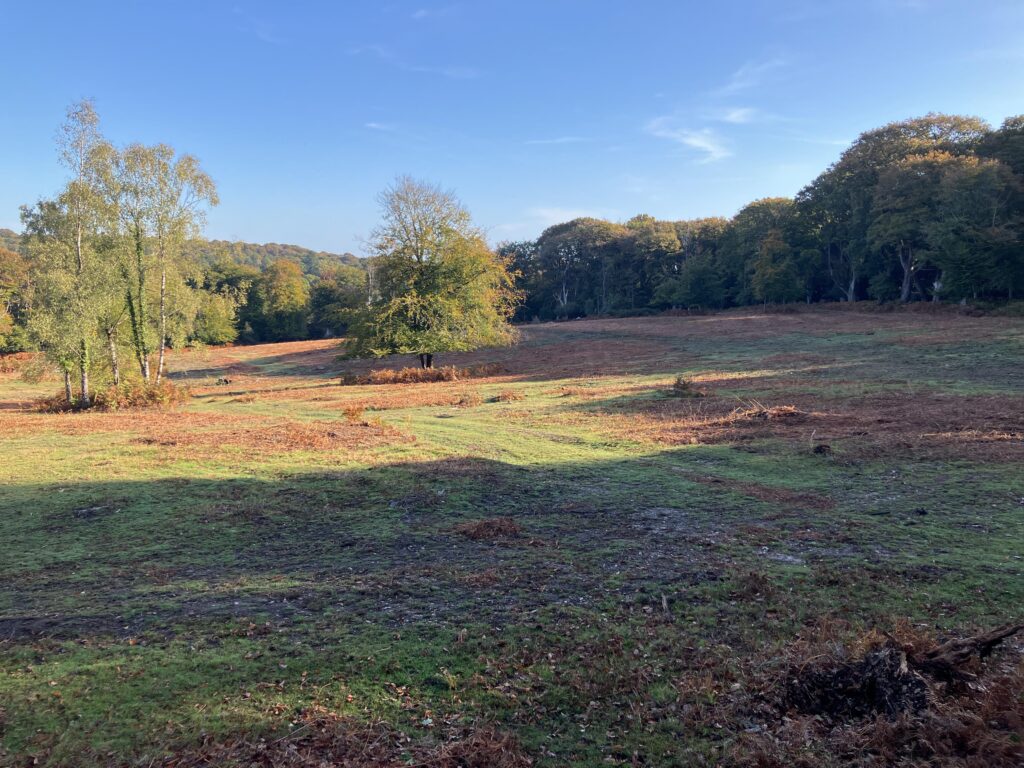
The effects of bracken harvesting on vegetation dynamics
After conifer plantations are felled, bracken often proliferates vigorously, outcompeting characteristic heathland species.
The bracken harvesting programme aims to reduce bracken dominance and create conditions that enable the recovery and re-establishment of heathland flora.
Monitoring tracks both bracken regrowth and the response of target heathland communities.
In addition to vegetation data, fixed-point photographs are taken regularly to provide a visual record of habitat change over time.
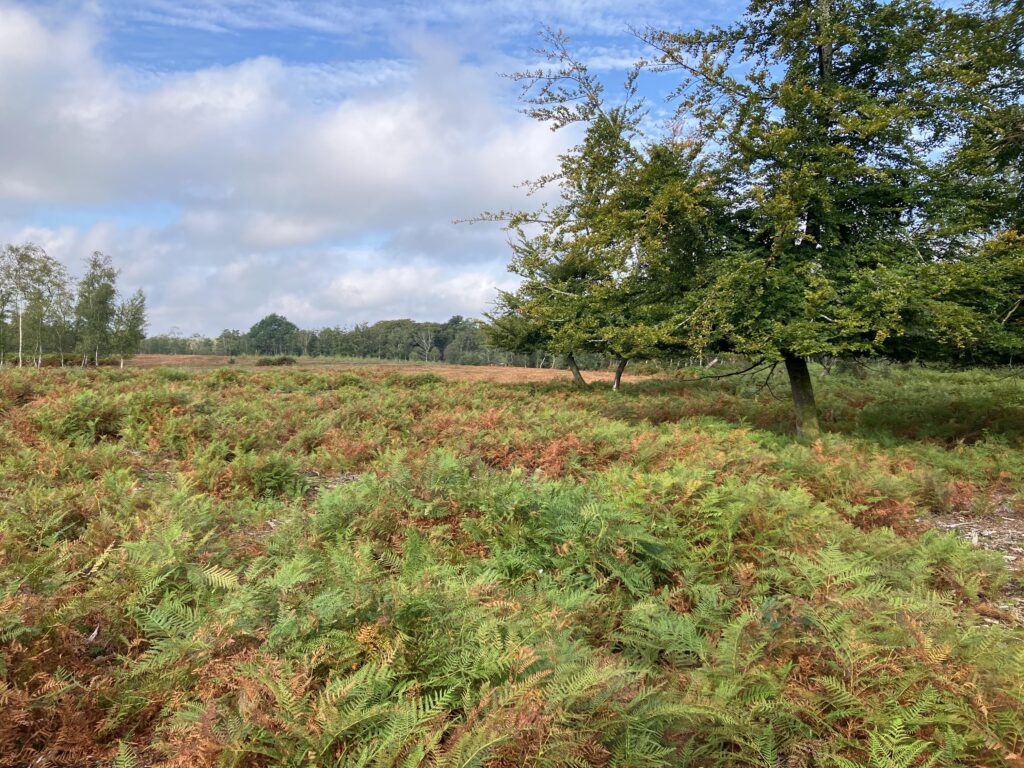
Post-restoration survey results
Forestry England commissioned detailed botanical and vegetation surveys from external contractors to gain a deeper understanding of post-restoration habitat condition and species composition.
Baseline data was collected in 2021, with additional monitoring at one site (Denny) undertaken in 2023. The 2024 report provides the first full comparison across four sites:
- Turf Hill North
- Turf Hill South
- Dunces Arch
- Denny/ Matley
Results varied depending on the site. However, in general, there was an overall increase in species-richness, with smaller herbs and grasses typical of heath and acid grassland more frequent post-restoration.