Grasslands
'Lost' lawns
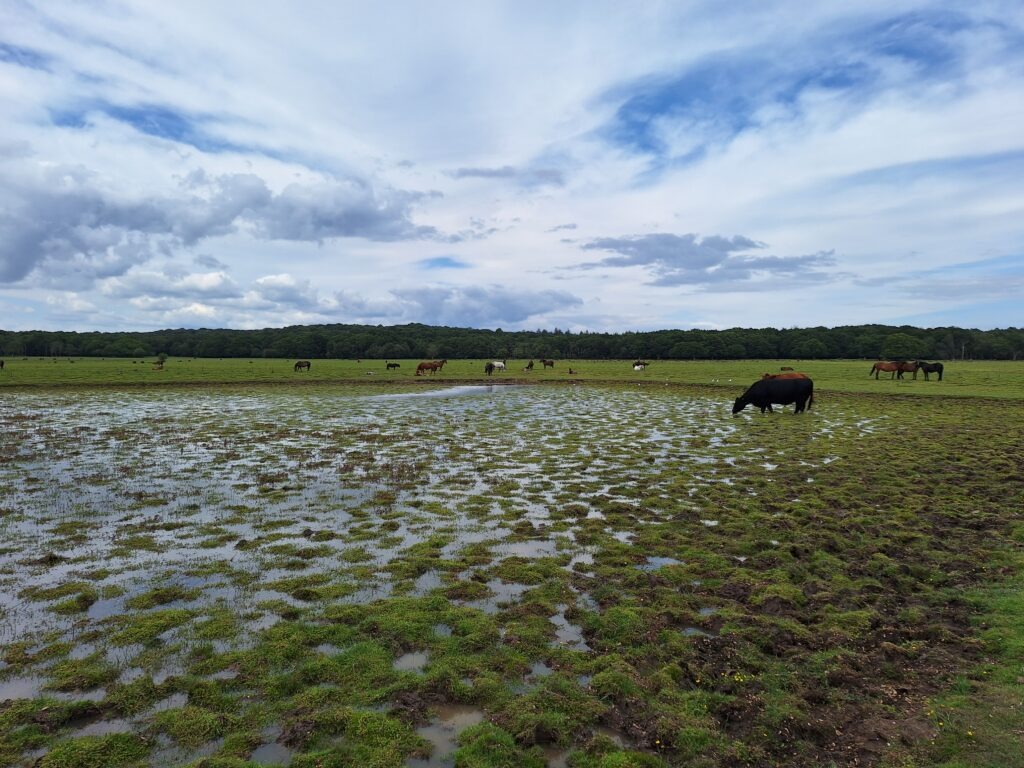
Forestry England has been restoring ‘lawns’ (a local name for herbaceous rich, wet, acid grasslands within the New Forest) where they have been lost to dense scrub and natural regeneration of woodland.
The work aims to restore wet lawn habitats, reduce fragmentation of lawns and restore open habitats in areas of pasture woodland, ensuring the mosaic of habitats, for which New Forest is so famous, is protected.
Lawn habitat
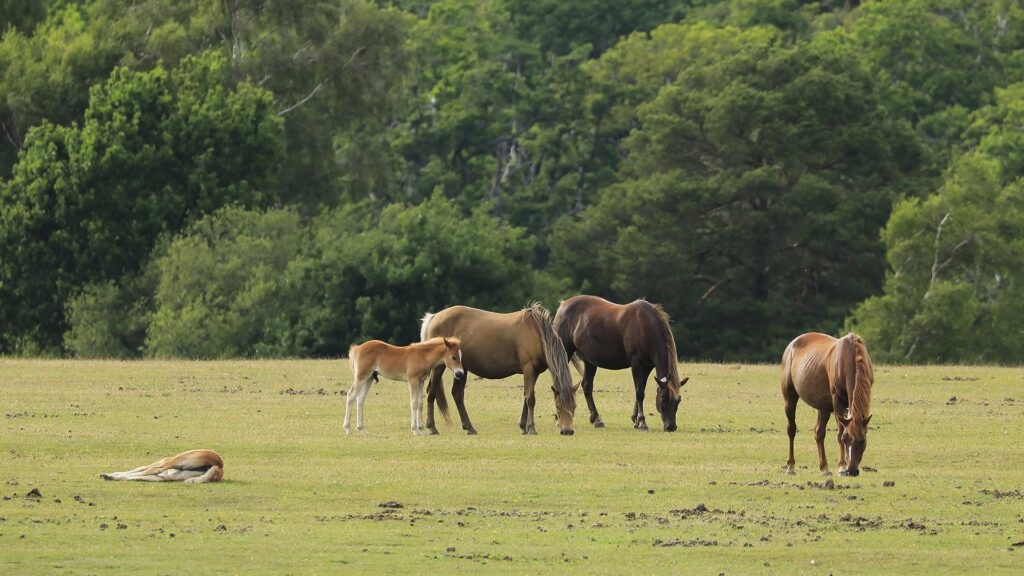
The New Forest’s lawns are unusual in lowland England because they have remained largely uncultivated. They have not been ploughed, reseeded or treated with artificial fertilisers, which means their soils remain undisturbed and relatively nutrient‑poor. This lack of enrichment prevents fast‑growing grasses from dominating and allows a wide range of specialised plants to survive—many of which have disappeared from improved grasslands elsewhere in England. Grazing by livestock also helps to ensure no single species is able to dominate within these grasslands.
As well as grass species such as velvet bentgrass and purple moor-grass, the lawns support sedges such as carnation sedge, white beak sedge and flea sedge, which are particularly characteristic of the New Forest and uncommon elsewhere in southern England. They also support a diverse range of flowering herbs—such as creeping thyme, devil’s‑bit scabious, heath milkwort, harebell and chamomile, providing a vital nectar and pollen source for pollinating insects.
As part of HLS, Forestry England has restored more than 30 hectares of ‘lost lawns’ across the open forest. Forestry England's most recent projects include expansion of habitat at Balmer Lawn, Anderwood Lawn and Stricknage Wood.
Grazing regime
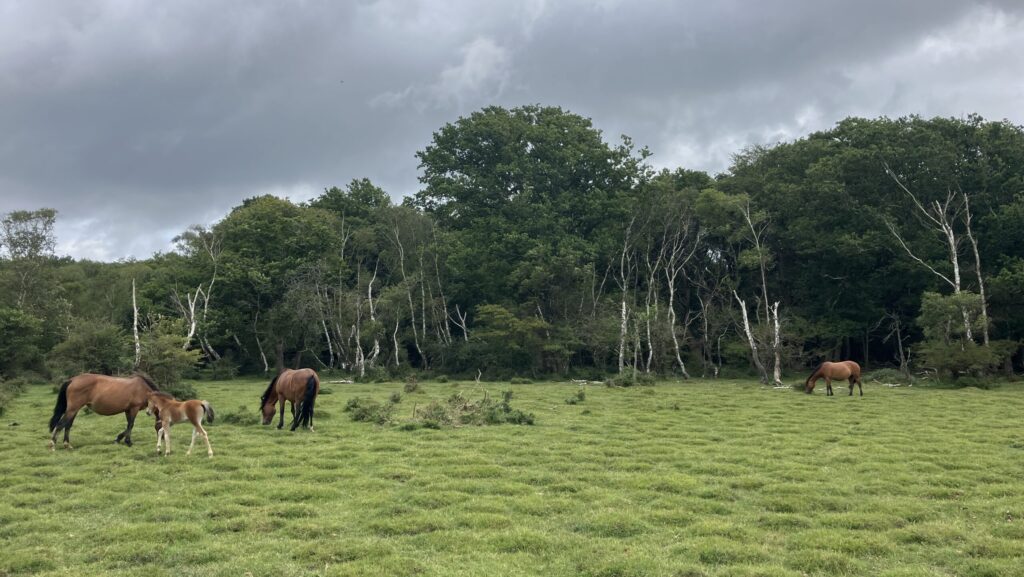
The grassland is characterised by a very short sward which allows germination of rare species.
The key to maintaining these lawn habitats is regular grazing.
The New Forest’s ability to have large numbers of free-roaming grazing animals throughout the year allows this habitat to predominantly maintain and manage itself.
Grazing in this way creates natural variations in sward length resulting in many different localised conditions and preventing any one species from dominating.
Lawn restoration work
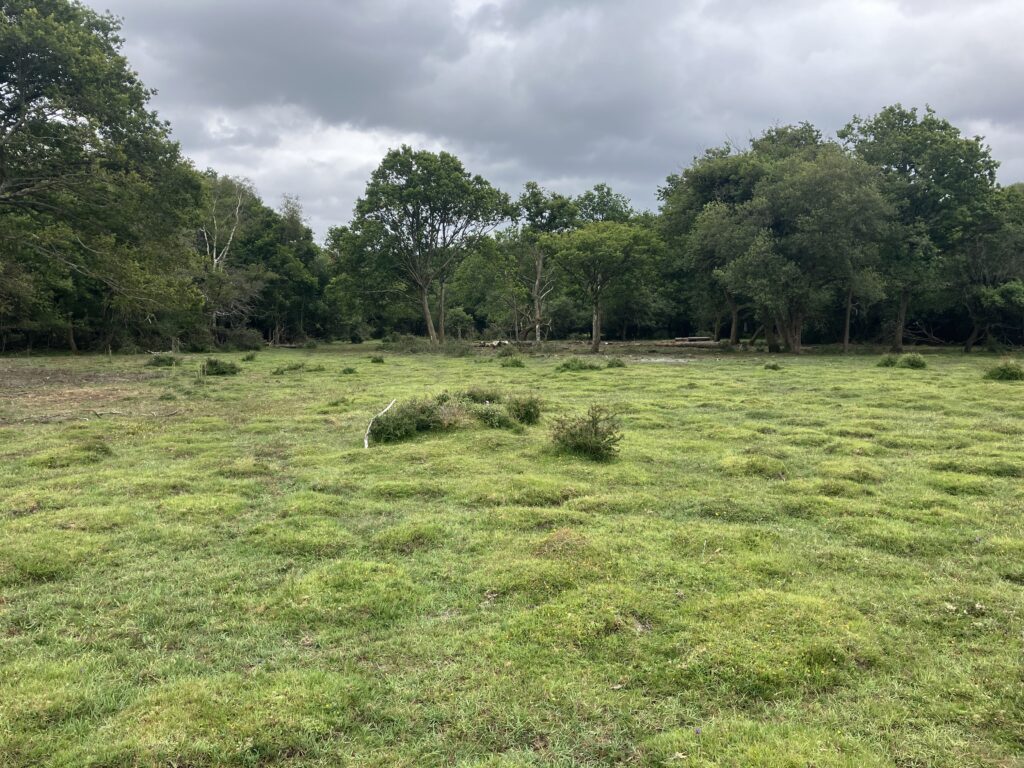
Forestry England’s lawn restoration work is targeted in areas that will have the greatest benefits for biodiversity.
It includes removing older scrub while leaving younger scrub patches and creating open pasture woodland through landscaping and coppicing.
Bracken harvesting
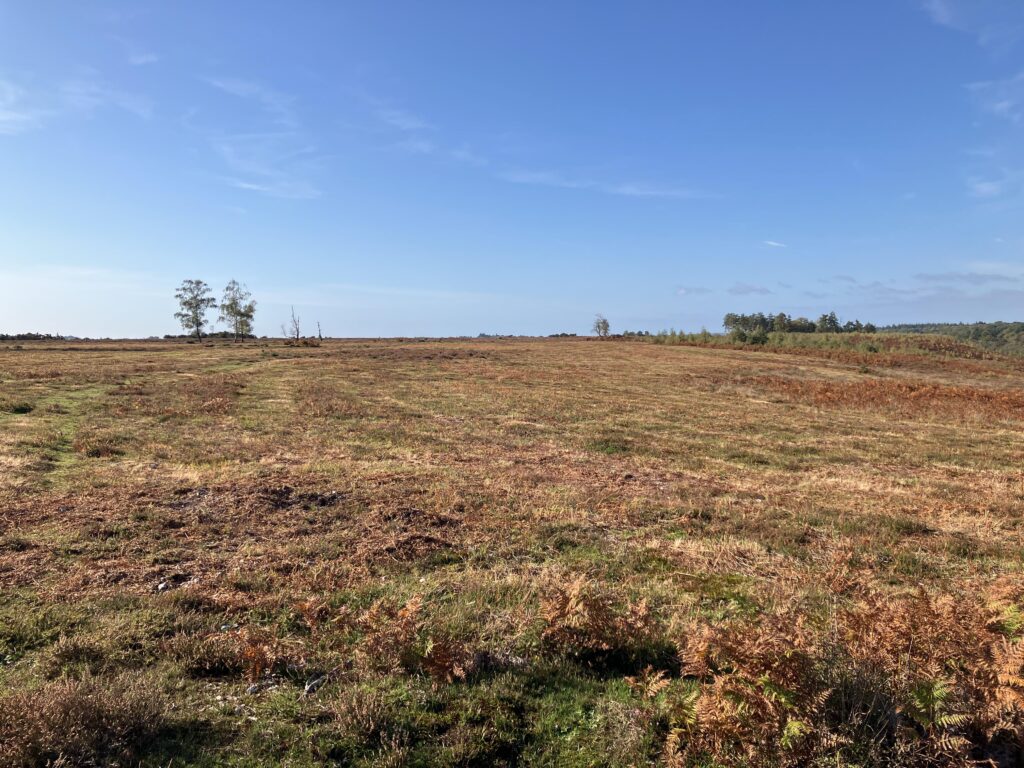
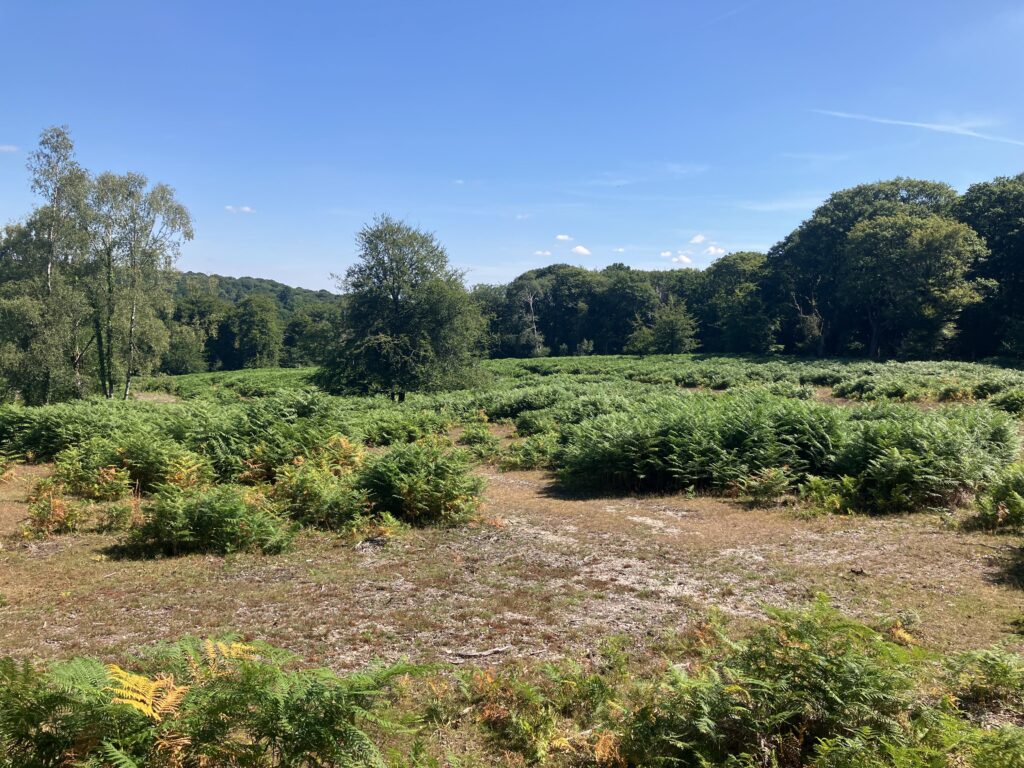
Forestry England undertakes an annual bracken harvesting programme to help restore and maintain priority habitats including acid grassland, New Forest lawns, and areas of lowland heath. While bracken is an important habitat that supports a wide range of wildlife, in some locations it has become overly dominant, reducing habitat diversity and suppressing more sensitive plant species. Harvesting is therefore targeted at specific sites where management is needed, particularly in recently felled plantation areas and locations of high conservation value, such as sites supporting the nationally important New Forest Gladiolus (Gladiolus illyricus). Sites are selected based on factors including bracken density and ground flora condition and terrain, with the aim of creating a more open habitat structure that benefits a wider range of species. Bracken is managed rather than eradicated, ensuring a balance between maintaining its ecological value and supporting the restoration of diverse heathland and grassland habitats.
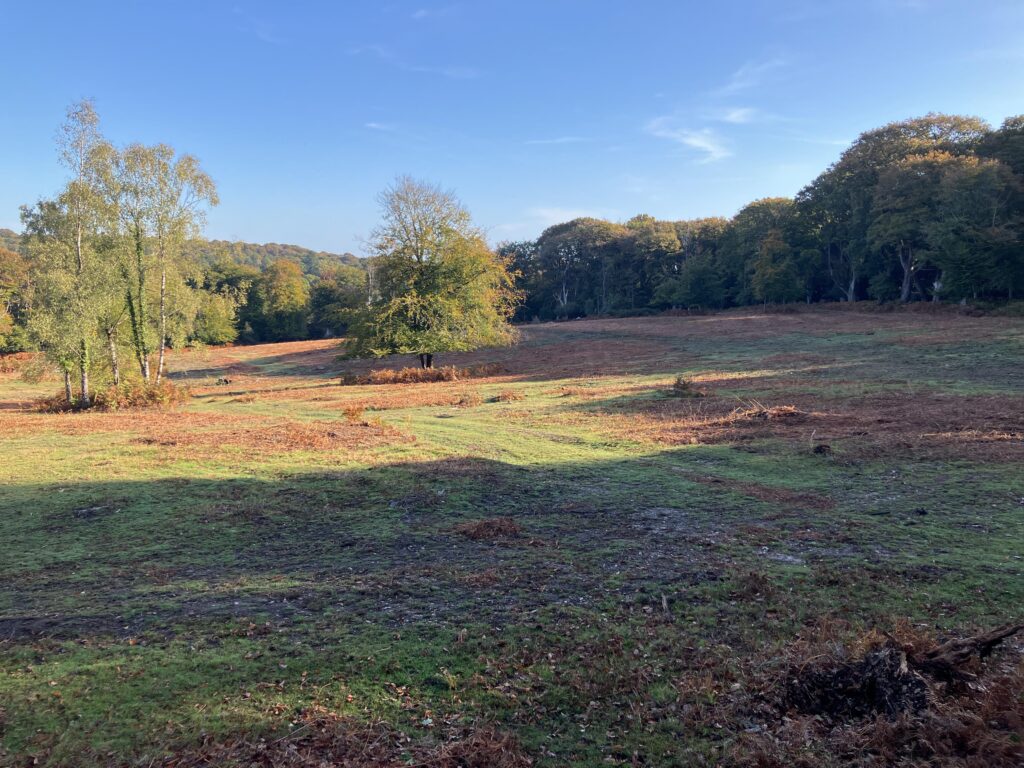
After bracken harvesting
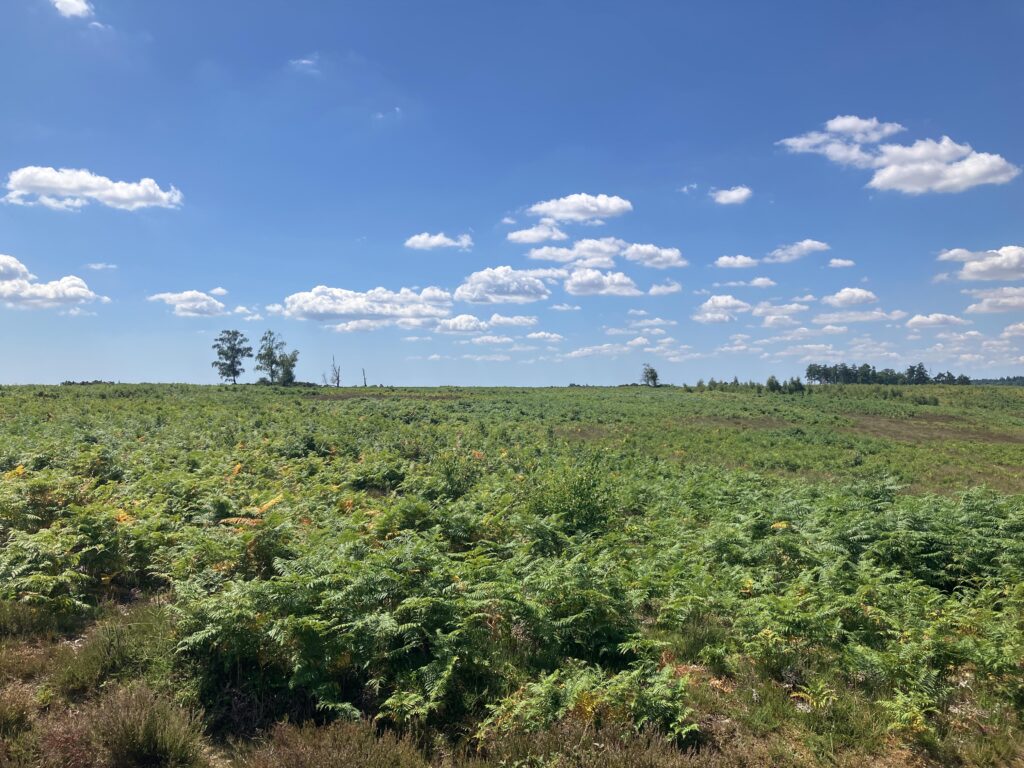
Before bracken harvesting