
Penny Moor
Penny Moor
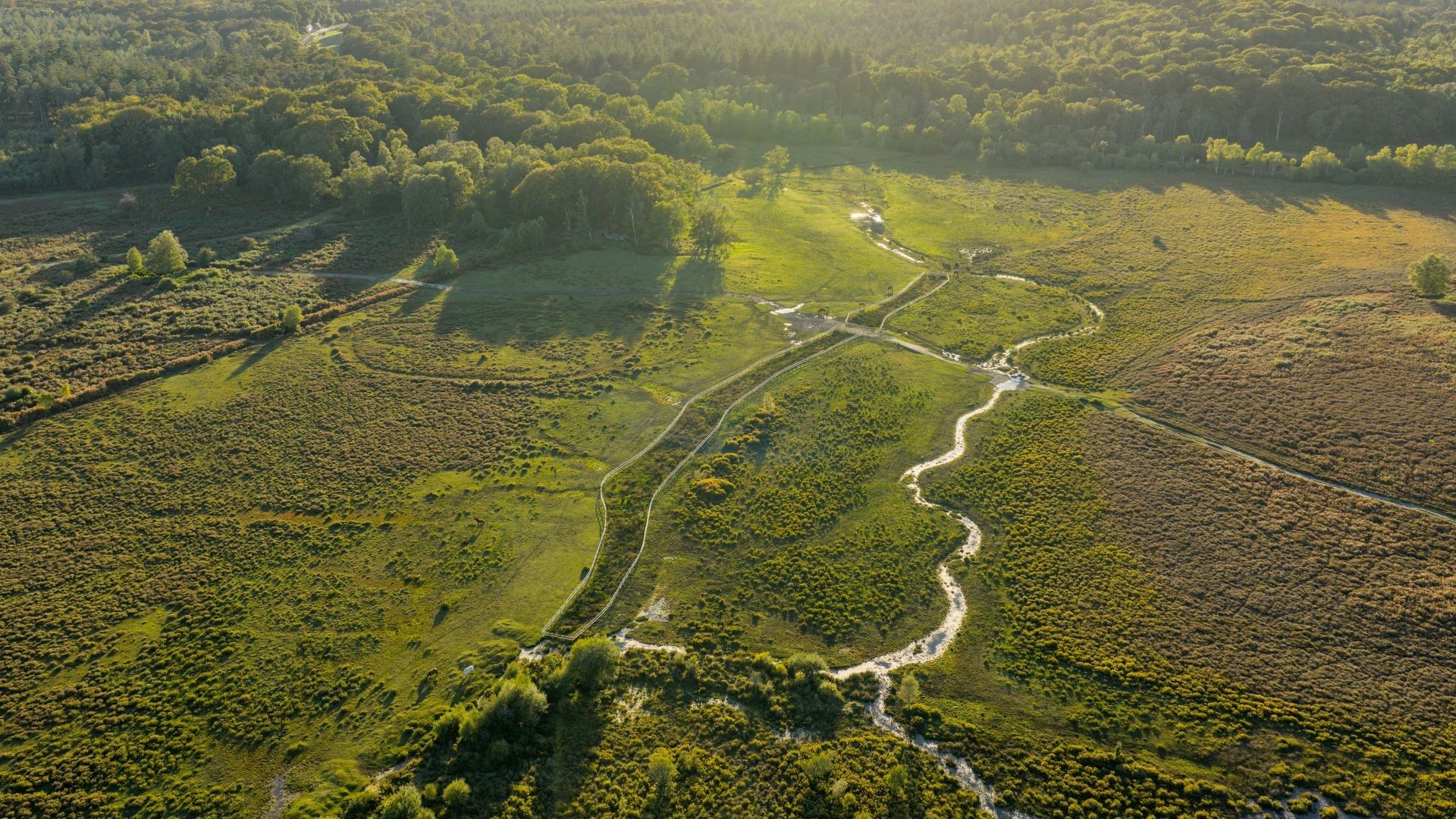
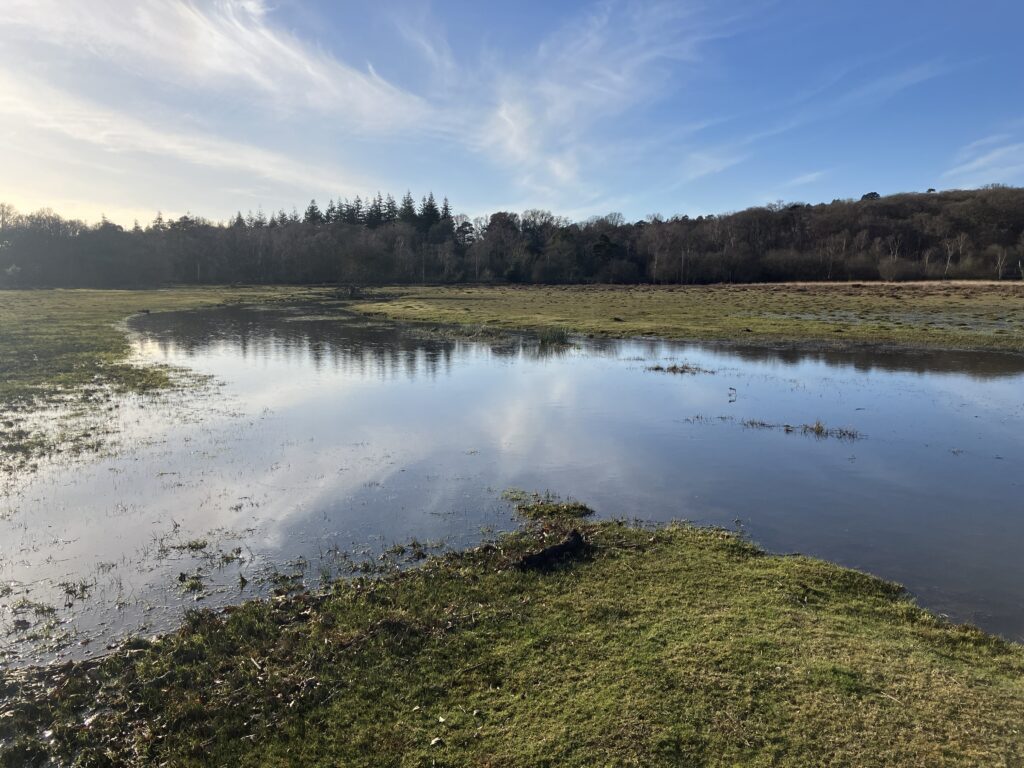
This project focused on restoring Penny Moor, a wetland in the New Forest which feeds into the Shepton water and eventually into the Beaulieu river.
The work aimed to restore the naturally hydrology of the area, which had been disrupted by drainage works in the late 1960s leading to the loss of rare wetland species and habitats.
Restoration efforts began in the late 1990s under the LIFE II project and have continued through the HLS scheme.
What were the issues?
In 2013, restoration work involved infilling part of the artificial drain and relocating the stream to its natural course, where meanders were evident. However, a redundant drain was left due to the presence of rare plant species.
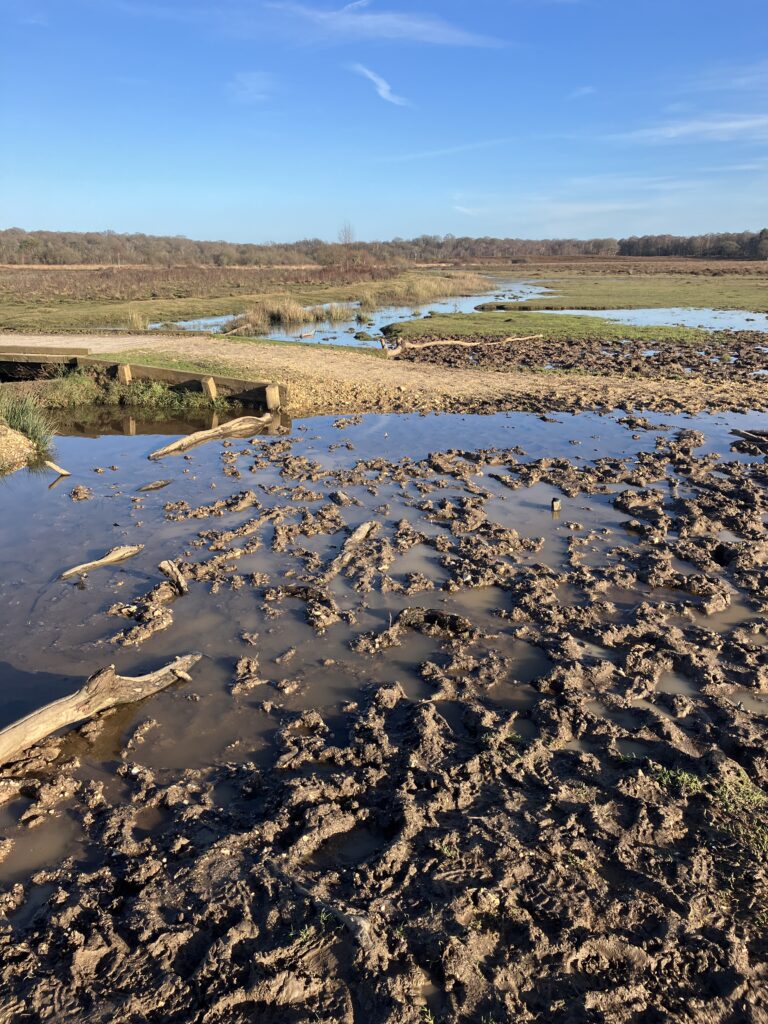
By 2024, populations of these plants were found in the main channel, but the drain itself was taking significant flow, had clear spoil banks and there was extensive poaching around the footbridge because this was the only safe way for livestock and people to cross the drain.
What was done
Restoration work aimed to remove this remaining drain and restore the natural floodplain hydrology.
The spoil banks along the drain were reprofiled, the drain infilled and disconnected from the main watercourse, and the two bridges were replaced by ford crossings, allowing for a more natural flow of water across the livestock access route.
After consultation with Verderers and Commoners, a very shallow secondary channel was put in through the wet lawn, to try and discourage water from pooling around the crossing point.
A temporary fence was also put in around the drain to protect livestock, as immediately post restoration work it was extremely wet and boggy. Now that the habitat has had time to stabilise this will be removed.
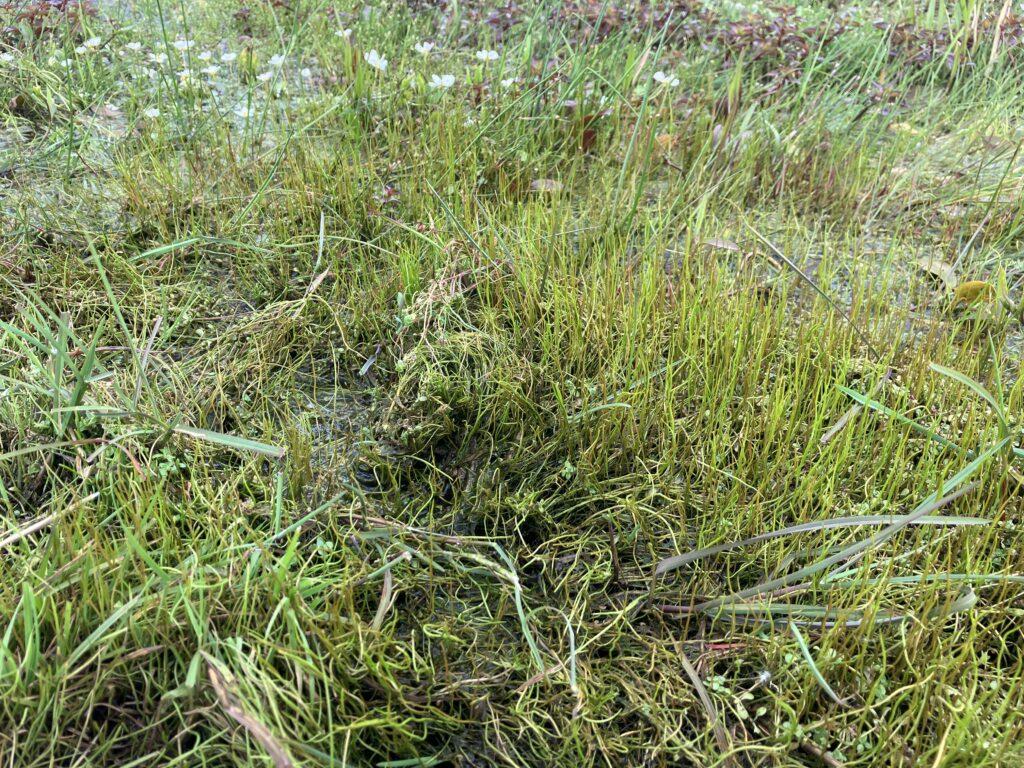
Photo: Pillwort at Penny Moor following restoration work
'It’s still early to judge full success, but results at Penny Moor look positive. Vegetation surveys recorded abundant pillwort, a rare aquatic fern, showing the area is supporting key New Forest species. The site is also great for wetland birds like snipe, and I even spotted a white tailed sea eagle flying overhead not long after restoration work was complete!'
Suzi Egleston, HLS project manager at Forestry England