

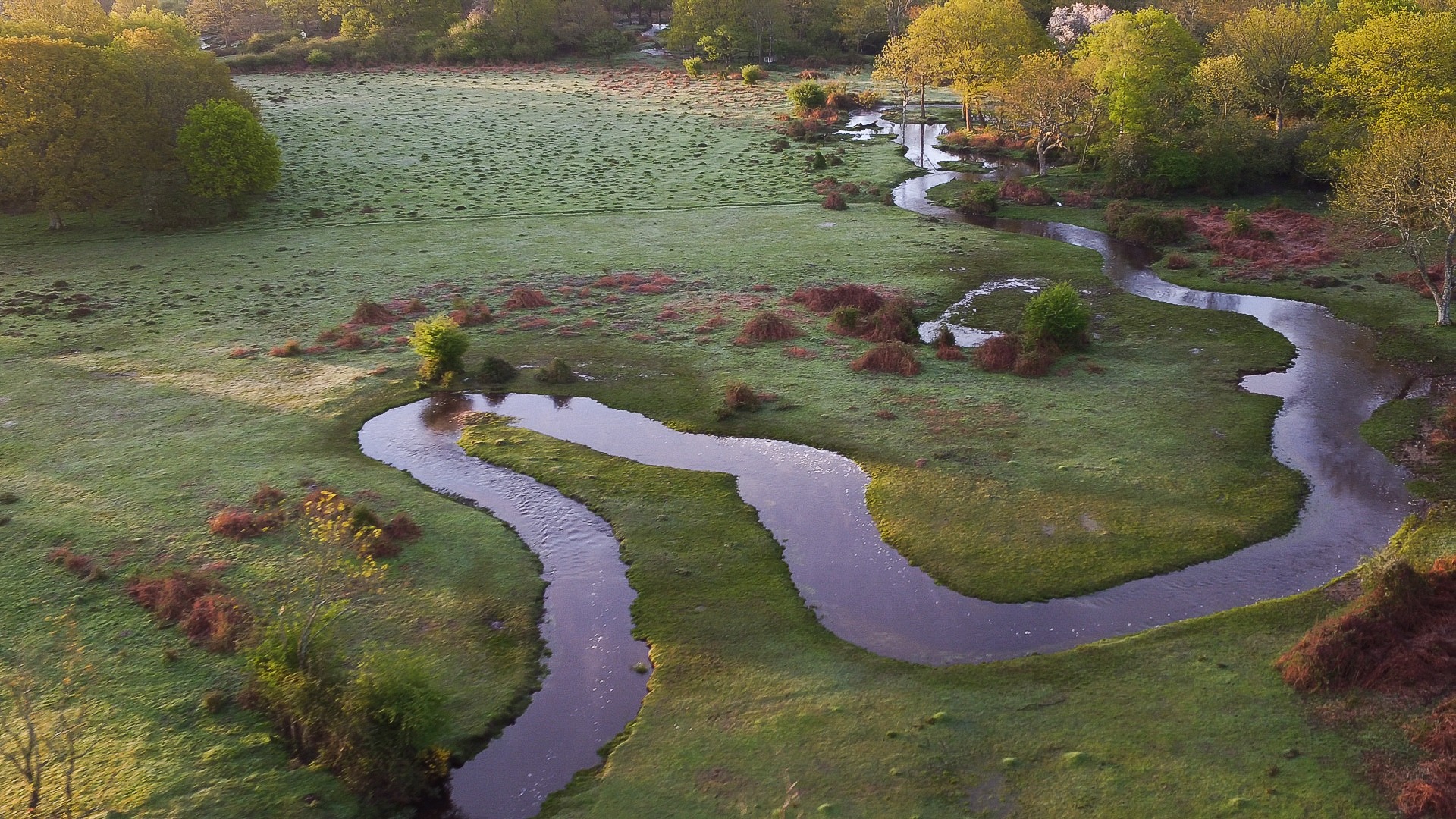
New research has revealed that returning rivers’ natural wiggles and restoring wetlands across the New Forest are supporting the recovery of Britain’s rarest wildlife in the area, while also building greater resilience to climate change and extreme weather events.
In partnership with Forestry England, researchers for the New Forest Biodiversity Forum have surveyed four restored wetland sites and found 31 nationally rare, scarce and threatened species of plants and animals, as well as dozens of other wetland species that are thought to have returned following restoration work.
The restored wetlands also have a key role to play in making the New Forest more resilient to extreme weather conditions. Despite the severe drought this summer, many of these landscapes remained wet, providing a haven for wildlife and livestock. They are also storing carbon, reducing the risk of wildfires and in winter acting like giant sponges helping to reduce the risk of downstream flooding.
The surveys were carried out at Harvest Slade, Longwater Lawn, Warwick Slade and Wootton Bridge by Professor Russell Wynn, Chair of the New Forest Biodiversity Forum, with support from members of the New Forest Volunteer Ecological Surveyor Programme (VESPA).
The survey results revealed that:
- Restored wetlands are supporting a variety of rare and threatened species including breeding Common Toads, Kingfishers, Raft Spiders, River Skaters, and Small Red Damselflies, with eight species of dragonfly and damselfly observed along just 100 metres of restored stream at Harvest Slade
- At Warwick Slade, just one square metre of restored stream supported four threatened plant species growing together – the endangered Lesser Marshwort and Lesser Water-plantain, the vulnerable Marsh Pennywort, and the nationally rare Hampshire-purslane that is almost wholly restricted to the New Forest
- The development of open muddy stream margins at Harvest Slade has allowed the nationally scarce Pillwort to spread into new areas since restoration was completed just over a decade ago, while the rare cranefly Tipula marginella was recorded there for the first time
All of these areas have been restored by Forestry England over the last 17 years. The work aims to reverse changes made in Victorian times when streams and mires were straightened to dry out wetlands for forestry and land management. While these changes reflected the priorities of the time, these drained areas make it harder for nature to thrive and faster flowing water causes erosion and potential flooding further downstream.
Forestry England’s work, carried out as part of the Verderers of the New Forest High Level Stewardship Scheme, has included putting the natural meanders and wiggles back into streams, removing historic drainage ditches and reconnecting the natural floodplains so that water can spread naturally across the landscape once again. This is creating wetter habitats and ideal conditions for rare wildlife to thrive.
The surveys also revealed how important wetlands are for local Commoner’s livestock. New Forest ponies were seen feeding on the lush wetland vegetation at all four restored sites, and when accessing open water to drink they create open muddy edges that provide habitats for several threatened species.
Professor Russell Wynn, Chair of the New Forest Biodiversity Forum, said: “The New Forest’s wetland habitats are internationally important but have been degraded by past drainage, while today they face new threats including climate change and associated extreme weather, aquatic pollution, and non-native invasive species. We are supporting Forestry England and other partners who are working to protect and restore these amazing habitats and expand their range across the New Forest. Encouragingly, my enduring memory of the surveys this summer was just how vibrant and full of life the wetland restoration sites were, even during extreme drought.”
Leanne Sargeant, Nature Recovery Manager at Forestry England said: “Rivers and wetlands are important places for nature and it’s really encouraging to see so many species at those we have restored. Wetlands also play a key role in helping the New Forest cope with more extreme weather conditions. We saw this during this summer’s wildfire when the bogs at the affected area remained resilient and helped prevent the fire from spreading further. In winter, properly functioning wetlands help to store more water, slow the flow and help to manage flooding further downstream. Helping nature to function as intended has huge benefits for both biodiversity and local communities.”
The findings also feature in a new film produced by the Forum with Forestry England showing how the damaged wetlands are being restored, highlighting the nature recovery already taking place, and why restoration helps build landscape resilience for the future.
The research forms part of a wider programme by the New Forest Biodiversity Forum, co-founded and powered by Kairos Philanthropy, to build the evidence base needed to guide nature recovery across the New Forest National Park. The success of these restored sites is just the beginning, with more wetland restoration projects planned to help create a healthier, more climate-resilient New Forest for wildlife, people and livestock.