Non-Native Invasive Plants
Invasive plants
The New Forest is one of the UK’s most important landscapes, with wetlands, ancient woodlands, heathlands and ponds supporting a rich variety of wildlife.
However, invasive non-native plants threaten these habitats by spreading quickly and out-competing native species, reducing food, shelter and breeding opportunities — and ultimately biodiversity.
The HLS scheme has helped to support work to tackle this includes the New Forest Non-Native Plants Project led by the Hampshire and Isle of Wight Wildlife Trust, alongside a rhododendron control programme run by Forestry England.
The New Forest Non-Native Invasive Plants Project
With funding from the HLS scheme, invasive non-native plants are removed from the Open Forest as part of the New Forest Non-Native Plants Project.
Examples of these include:
- Cotoneaster
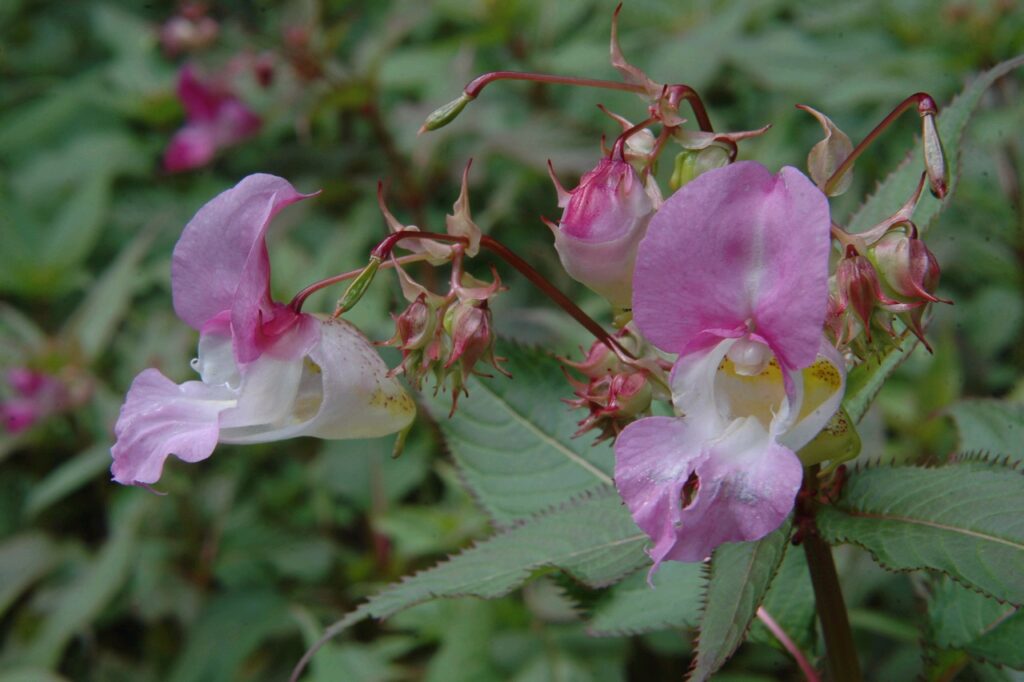
- Himalayan balsam (pictured)
- Japanese knotweed
- Parrot’s feather
- Yellow azalea
- Pitcher plants
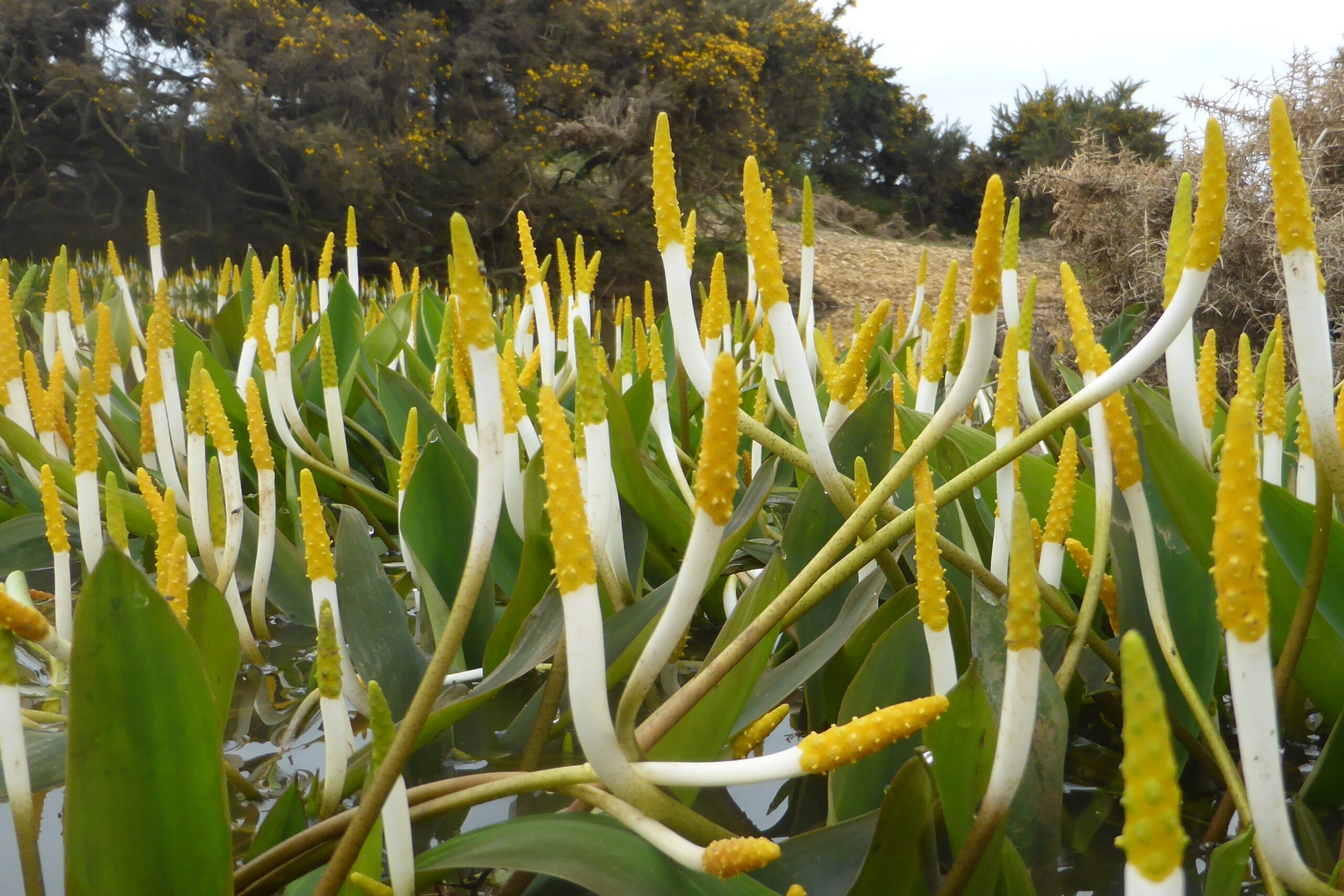
- Golden club
- Iris laevigata
This work supports the wider New Forest Non-Native Plants Project, led by Hampshire and Isle of Wight Wildlife Trust, which aims to survey, control and research non-native plants, as well as spread awareness of their presence and give advice on their control.
'It’s estimated that 10-15% of non-native species established in Great Britain cause significant adverse impacts on the environment, the economy, our health and the way we live. In such an ecologically important area as the New Forest, it is vital we control their spread. We rely on everyone’s eyes and ears on the ground, so please get in touch if you see anything.'
Holly Fitzgerald, New Forest Non-Native Plants Officer at Hampshire and Isle of Wight Wildlife Trust
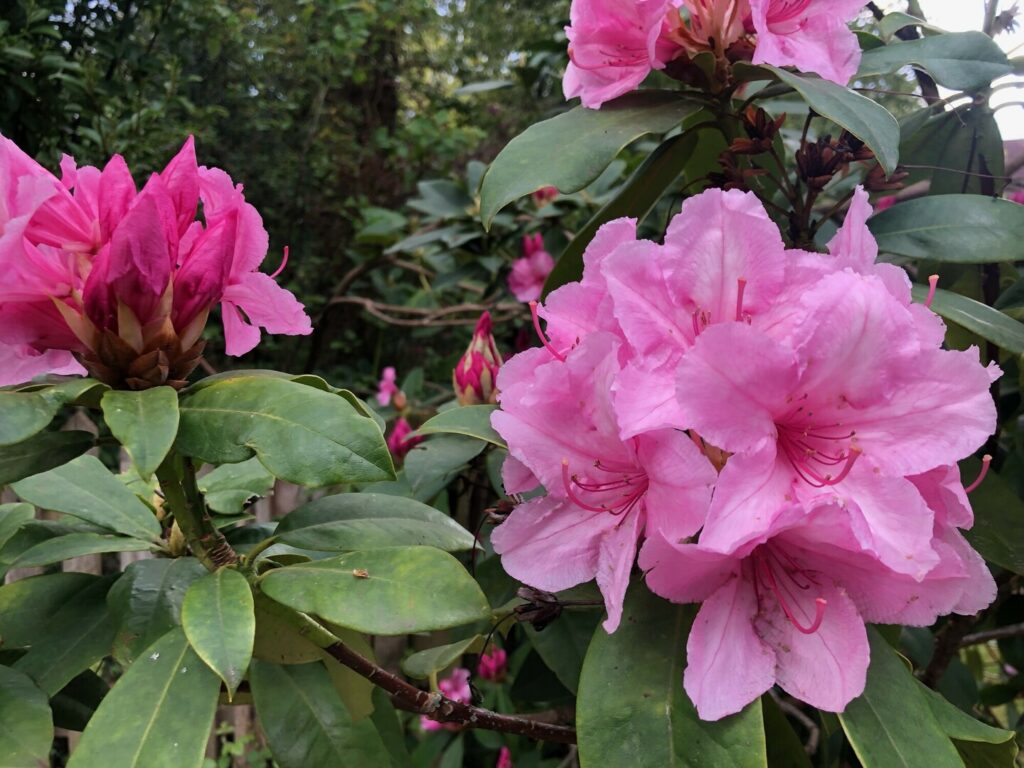
Rhododendron control
Rhododendron is a highly invasive non-native plant introduced to Britain in the 1700s.
Originally an ornamental species, it has spread into natural habitats where it forms dense thickets that outcompete native vegetation.
Left unmanaged, it can create extensive stands with little growing beneath. This reduces plant diversity and, in turn, the insects, birds and other wildlife that depend on a healthy understorey.
A single large bush can produce millions of wind-dispersed seeds each year, meaning it spreads rapid if mature plants are not controlled.
Rhododendron can also carry Phytophthora, a harmful pathogen affecting many native trees and plants. Its also toxic to livestock—an important concern in the New Forest. By dominating the Forest floor, it also reduces available grazing.
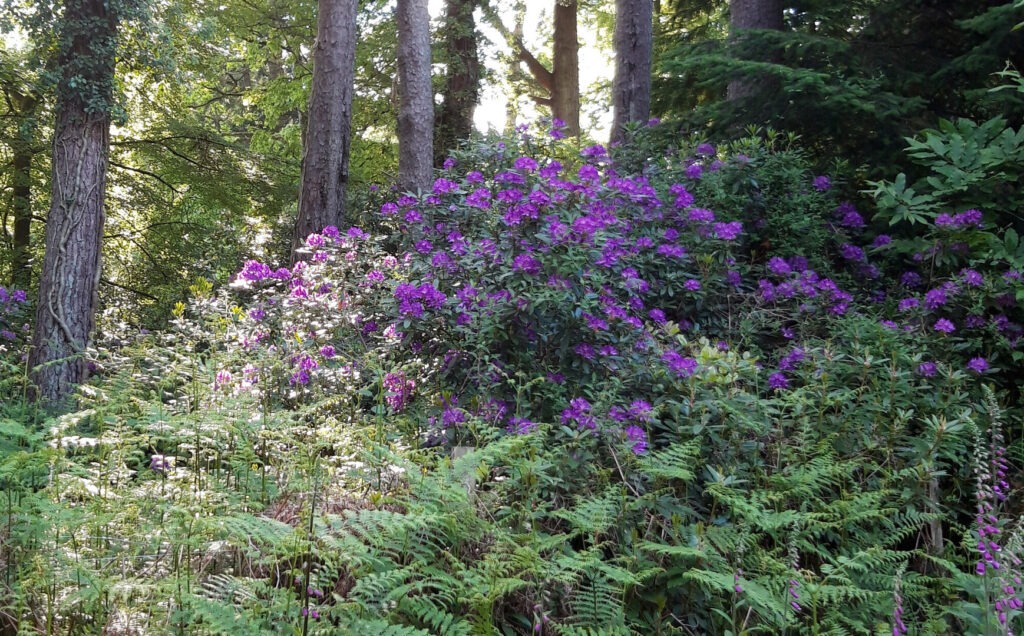
What's being done
In the New Forest, Forestry England has been working to control and eradicate rhododendron across more than 20,000 hectares of HLS-eligible land.
It has managed rhododendron at 58 sites, In 2025 it removed this invasive species over 400 hectares across 16 sites.
Management uses seasonal techniques: cutting and burning bushes in winter and returning during summer to treat regrowth.
As rhododendron is extremely resilient, several years of follow-up are needed to fully remove it and while clearance can initially look untidy, native plants quickly return once rhododendron is removed.
If you have rhododendron on your New Forest property, please keep it contained to prevent spread onto the Open Forest. If you spot rhododendron elsewhere, report it by email to hls.enquiries@forestryengland.uk to support efforts to protect New Forest biodiversity.
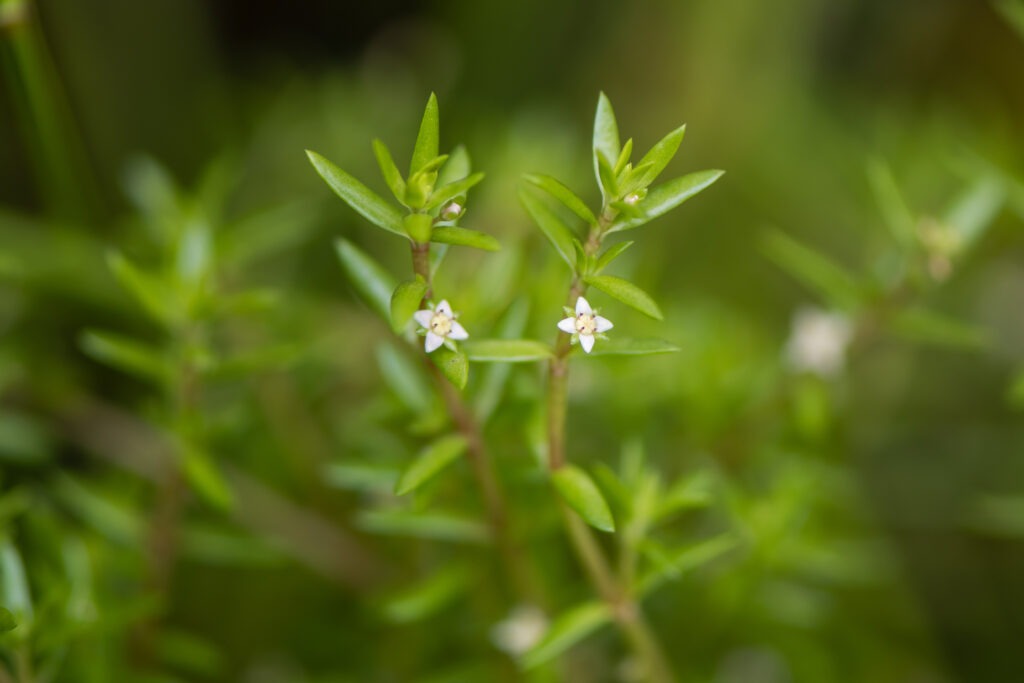
New Zealand Pygmyweed
The HLS scheme funded a three-year project, led by Freshwater Habitats Trust, to better understand and manage the spread of New Zealand pygmyweed.
Surveys of 579 ponds and waterbodies found the plant in around 20% of sites, showing it is widespread across the Forest.
Its presence is closely linked to areas with higher human access, such as car parks and lay-bys. While not always dominant, it can become highly invasive in some locations, particularly where conditions like pH and nutrient levels favour its growth.
Where pygmyweed does dominate, it can significantly reduce bare ground and crowd out native plants, which in turn threatens species that rely on open conditions, such as Pillwort.
Trials of three control methods – herbicide, hot foam and aquatic dye – highlighted how difficult it is to manage. Although herbicide initially reduced cover significantly, and the other methods had some short-term impact, all sites returned to pre-treatment levels within a year, showing long-term control remains a major challenge.
This study revealed the importance of preventing spread of this species, as once established it is extremely difficult to eradicate. When visiting wetland areas of the New Forest, please try and follow the three-step “Check, Clean, Dry” approach to help limit the spread of invasive species.
Report non-native invasive plants in the New Forest
If you see any non-native species please contact the HLS team using the form below.