

Heathlands
Restoring habitats
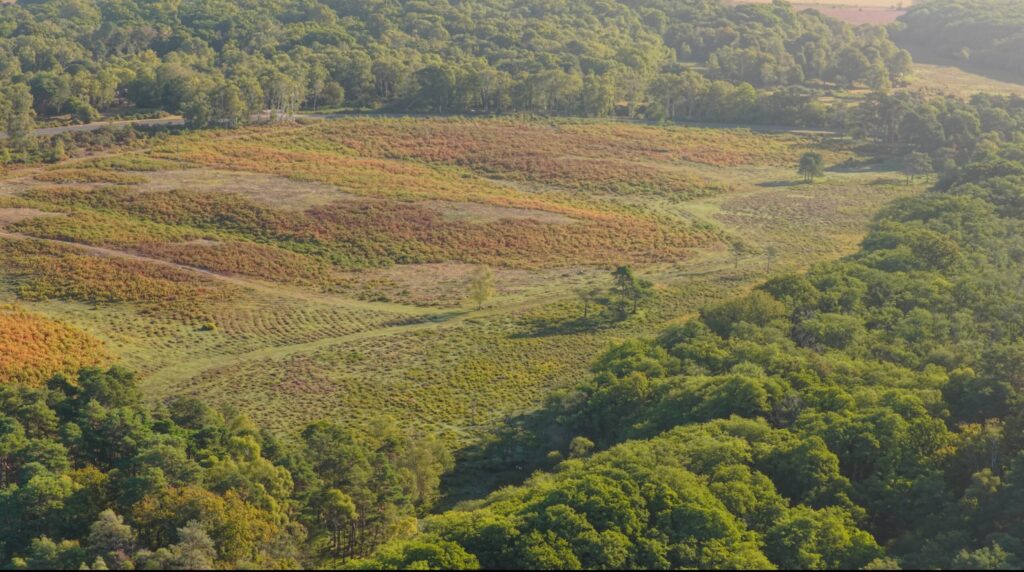
The heathland areas of the New Forest are characterised by a rich mosaic of dry heath, wet heath, mires, bogs and other wetland habitats. Together, these open habitats form one of the UK’s most diverse and ecologically valuable landscapes.
These habitats support a wide range of rare and specialist species, help regulate water across the landscape, and play an important role in tackling climate change by storing large amounts of carbon in wet soils.
Restoration of open habitats focuses on returning areas of heathland and wetland to good ecological condition. This includes removing non-native conifers and clearing encroaching scrub so that heathland can regenerate naturally.
Forestry England is also restoring areas of open habitat following the removal of conifer plantations within inclosures, in line with the current Forest Design Plan.
This work involves removing forestry ridges, furrows and stumps left by former plantations, making it easier to manage these areas in the future and helping the land return to functioning heathland.
A key part of open habitat restoration is restoring the natural hydrology. Forestry drains, originally dug out to dry out the land for the forestry plantations, are infilled, re-wetting habitats these dried out areas. Healthy mire, bogs and wet grasslands are particularly important for biodiversity, natural flood management and carbon storage.
What is the impact?
The restoration of heathlands by Forestry England is having a positive impact for nature.
An independent survey, conducted by Wild New Forest and the New Forest Biodiversity Forum, has assessed the impact of Forestry England’s work to restore several heathlands in the area. It found that in these newly restored, open areas over 70 different species of wildlife have returned.
The survey focussed on three different restoration sites over a two-year period. The results showed that wildlife including 22 nationally uncommon or threatened species of birds, reptiles, bats, insects, and fungi had all returned to these areas, many within the first year of conifer plantations being removed.
Amongst the wildlife recorded were nightjars – a striking bird that travels from Africa to breed – and woodlarks. Both of these ground nesting species had set up breeding territories, attracted by the open heaths and woodland edges created by the restoration. Under threat in many other parts of the UK due to a loss of habitat, boosting the numbers of ground nesting birds is a key objective of the heathland restoration work in the New Forest.
Other heathland specialist birds recorded during the surveys included breeding stonechats and meadow pipits, and non-breeding Dartford warbler and snipe.
The survey also found 13 notable types of fungi, including the tiny nail fungus that requires pony dung to grow, and the brittlestem Psathyrella pennata that requires recently burnt ground and is the first to be recorded in the New Forest for 50 years.
Nocturnal discoveries included five different species of bat hunting around the newly created heathland edges, as well as thriving populations of glow-worms and native cockroaches. In daylight hours the open sites attracted warmth-loving common lizards and slow-worms, and insects including the green tiger beetle and nationally scarce wood cricket.